
How to Search Criminal Dockets
Your first stop is Missouri Case.net, the public index that covers Wright County circuit-court cases. A case number is the best search key. Without one, search by litigant name. Narrow the results to Wright County or the 44th Judicial Circuit if the live form allows it. Before opening a result, compare the case type, filing date, location, and party role. A shared name alone never identifies a criminal court docket.
Inside a case, read the header first and the docket entries second. The header lists the category, division, judge, status, and any hearing information shown to the public. The dated entries track filings and court events. An entry with a document link may open a public attachment. Yet a missing link does not mean nothing was filed. For certified, older, or unclear records, go to the Wright County Circuit Clerk.
- Choose the Case.net search method that fits the information on hand, beginning with a known case number.
- Narrow the search to Wright County or the 44th Circuit when the public form permits it.
- Match the court, case type, filing date, location, and party type before selecting a result.
- Read the case header and dated docket entries for charges, settings, and later action.
- Call the clerk for an official copy, a document-access question, or a current-setting confirmation.
Note: A public index result is a finding aid, not a substitute for the clerk-held record.
Wright Criminal Docket Search Paths
Wright County publishes no criminal-docket database of its own. Case.net is the online state-court path. The clerk counter in Hartville is the local route when the index confuses you or an eligible document is not available remotely. Court Operating Rule 4 requires courts to keep public-access equipment, but the county does not state the Wright terminal's printing, login, or fee procedures. Call ahead and ask what you can view there.
The clerk's office sits at 125 Court Square in Hartville, and the published phone number is 417-741-7121. For a written request, mail it to P.O. Box 98, Hartville, MO 65667 after confirming the item, payment method, and delivery options. The clerk offers no Wright-specific email, fax, online-copy form, or bulk-data feed. A prosecutor traffic-resolution page is a separate process, not a full criminal docket search.
Choose the system first. Missouri Case.net covers state-court indexing; federal cases use PACER, and land documents belong with the county Recorder rather than the criminal docket.
What a Criminal Docket Shows
Missouri's recordkeeping rule makes clear that the court record is more than a search result. In an eligible Wright criminal case, the public display may show header data, scheduled hearings, status, and dated docket descriptions. The clerk-held record can also hold filed papers through final termination, subject to confidentiality rules. Read every entry in context. A charge is only an allegation. A setting does not prove the event occurred. A disposition should be read from the actual case entry.
| Case number | Missouri’s modern structure uses a year, location code, category, sequential number, and subcase code. CR identifies the criminal category; no Wright sample number is used because formats can vary. |
|---|---|
| Case header | May list the case style, category, filing date, division or location, assigned judge, parties, party type, and status as publicly permitted. |
| Docket entry | A dated description of a filing, order, hearing, motion, plea, sentence, warrant, or other court event. |
| Hearing setting | May identify a future date, time, location, judge, and event type. Confirm it because continuances can change the setting. |
| Document link | Can point to an attached public document when access is allowed. A missing hyperlink can also reflect a paper-only or restricted item. |
The Case.net File Viewer Help page explains that a docket-entry hyperlink marks an attachment when one is available to that user. An ECASE label points to an all-electronic case. Even so, document-security limits still apply.
Wright Criminal Docket Terms
Brief docket wording helps only when you read it as a court event. It is not a conclusion. Wright County criminal entries may reflect an arraignment, motion, plea, disposition, probation violation, or warrant. The 44th Circuit also assigns adult treatment and DWI treatment court cases to Circuit Division One. A treatment-court label reveals nothing about a participant's treatment information. That information carries its own access restrictions.
- Arraignment
- An appearance at which a defendant is advised of the charge and enters or is expected to enter a plea.
- Docket call
- A calendar call used to address cases set for a court session.
- Continuance
- A court action moving a hearing or proceeding to another date; the particular docket entry controls.
- Nolle prosequi
- A prosecutor dismissal entry. Its legal effect depends on the specific case entry.
- Disposition
- An outcome or status entry, such as a plea, dismissal, judgment, or other conclusion.
Use the full entry, plus the entries that follow, to understand the case. A warrant, plea notation, or dismissed count is never a complete picture of a person's current legal status.
Stages on a Criminal Docket
A Wright County criminal docket usually grows over time. The court receives a filing, sets the case, and records later proceedings. The exact order varies with the charge, the division, and whether the matter ends before trial. Court events appear as dated entries, so sequence matters. A continuance, amended filing, plea, or judgment later on can change how an earlier entry reads.
Docket flow: Filing → Arraignment → Pretrial → Plea or Trial → Disposition → Sentencing
Filing starts the court record. An arraignment and pretrial settings may come next. The docket can then show motions, a plea, a trial setting, a disposition, and sentencing or other post-disposition action. A pending entry establishes no guilt. A dismissal can likewise leave a public docket history where law permits, even though the charge was not sustained.
Note: A scheduled hearing is not proof that the hearing occurred or that the case ended that day.
Wright Criminal Docket Law Day
Wright County criminal cases follow a monthly rhythm. It is set by the 44th Judicial Circuit local rules. Law day lands on Thursday of the first full week of each month. Arraignments and docket call start at 9:00 a.m. Pleas and settled matters come at 10:30 a.m. Remaining pleas plus probation violations round out the day at 1:30 p.m. Sessions usually convene at 9:00 a.m. unless a rule or a specific setting says otherwise. These labels explain the calendar. But they do not promise what time your case will actually be heard.
The rules also build in a notice requirement. Counsel and self-represented parties must tell the opposing side and the Circuit Clerk at least five days before law day if they plan to take action. Skip that notice and the matter slips to the next law day. The clerk assembles the Law Day Docket for distribution. So a filing alone does not guarantee a hearing slot.
Before you go, confirm the division, date, time, and any continuance with the clerk. The current case docket always controls over this general schedule.
Which Court Holds Criminal Dockets
Wright County sits inside Missouri's 44th Judicial Circuit. That circuit works as one unified trial-court system rather than a single criminal docket. The Circuit Clerk maintains Circuit and Associate Criminal records along with traffic records. The 44th rules break the system into divisions. These are Circuit Division One, Associate Division Two, Probate Division Three, Juvenile Division Four, and Municipal Division Five. To spot the right court record, check the case type, division, and location listed in the header.
Criminal work spans several categories. Felony, misdemeanor, traffic, infraction, municipal, and treatment-related cases all appear on the Wright County criminal docket. Municipal cases from towns without an elected local system can land in the associate division. The local rules control that placement. Juvenile records carry distinct protections. A federal charge stays outside the Wright state-court docket entirely and belongs to the Western District of Missouri's PACER route.
Appeals take a different path. The usual state route runs through the Missouri Court of Appeals, Southern District, subject to jurisdictional exceptions. Remember that an appeal creates its own appellate record. It does not replace the Wright trial docket you started with.
Wright Criminal Treatment Dockets
The 44th Circuit local rules name two specialty tracks. These are adult treatment court and DWI treatment court, both assigned to Circuit Division One. Older drug-court language still sits in the rules. It describes a treatment-based alternative for certain nonviolent, low-risk, chemically dependent defendants. That history proves nothing about today's admission route, session calendar, or eligibility for any person.
Specialty records deserve extra care. Treatment, assessment, medical, or social material in these files faces stricter limits than an ordinary criminal docket. A public docket may show only a program designation or a procedural event, not the substance behind it. The Circuit Clerk can explain which entries are viewable. But neither the docket nor the clerk's office offers legal strategy. For current specialty-court details, use the clerk's published contact channel. Do not assume a program label explains an outcome.
Public Access and Sealed Criminal Dockets
Missouri court rules, not assumptions, govern public access to a Wright criminal docket. Court Operating Rule 4 covers statewide recordkeeping. It also covers the public access equipment. Court Operating Rule 2 supplies the access framework. Treat any public-review draft version as a draft rather than a final enacted rule. Missouri Chapter 610 does not override judicial confidentiality provisions.
Several record types stay out of view. Juvenile, sealed, expunged, protected, mental-health, and other confidential records may be missing from the index, the remote display, or the document viewer. A blank result means not publicly displayed. It does not mean no case exists.
If access is denied, ask the clerk for the rule, statute, or order controlling the record and for the available review process. Where the law requires one, only a court order can open a sealed record.
Access rules to check:
Court Operating Rule 4 governs the uniform recordkeeping system, public index concepts, and confidential record categories.
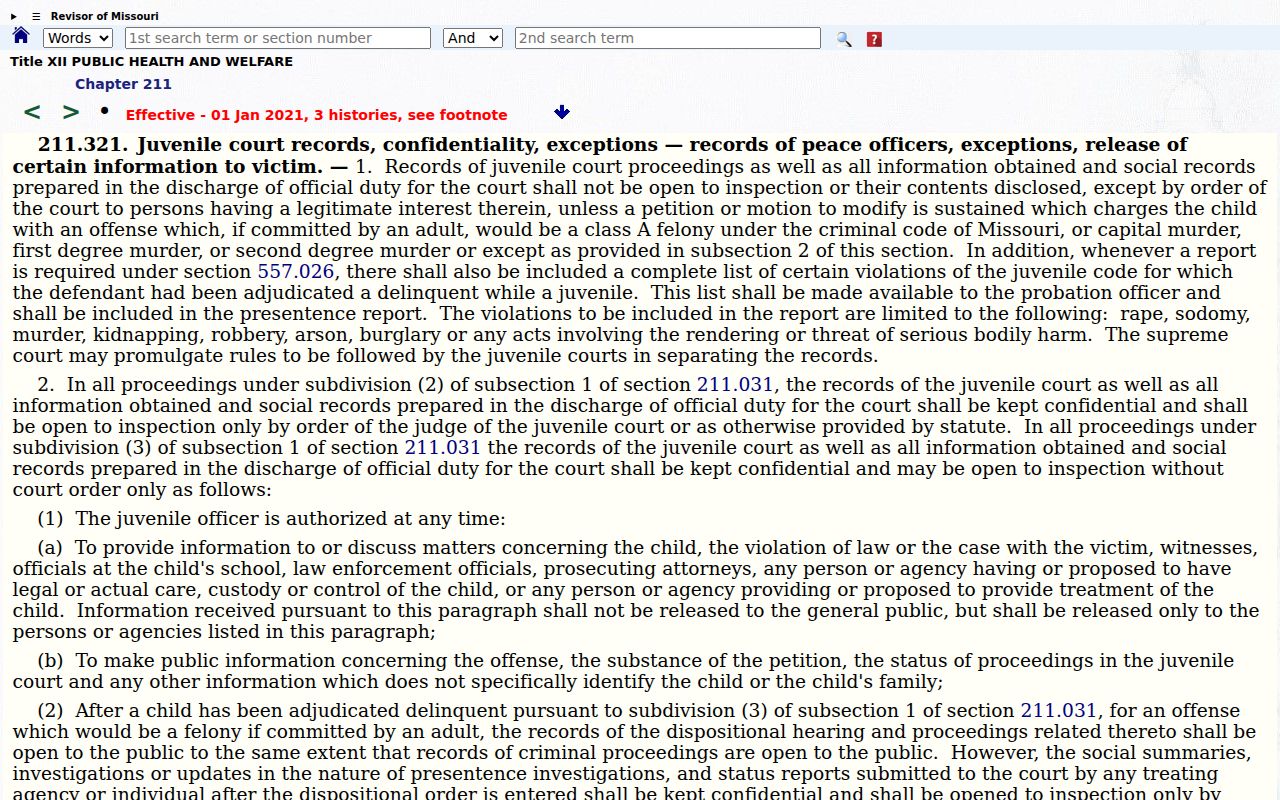
RSMo § 211.321 restricts juvenile records and states exceptions to confidentiality.
Missouri Rule 122.02 limits public access to specified juvenile and family materials.
Wright Criminal Docket Record Limits
The official Court Operating Rule 4 recordkeeping page is the right first stop. It draws the line between the public index and the official court record behind a Wright County case file.
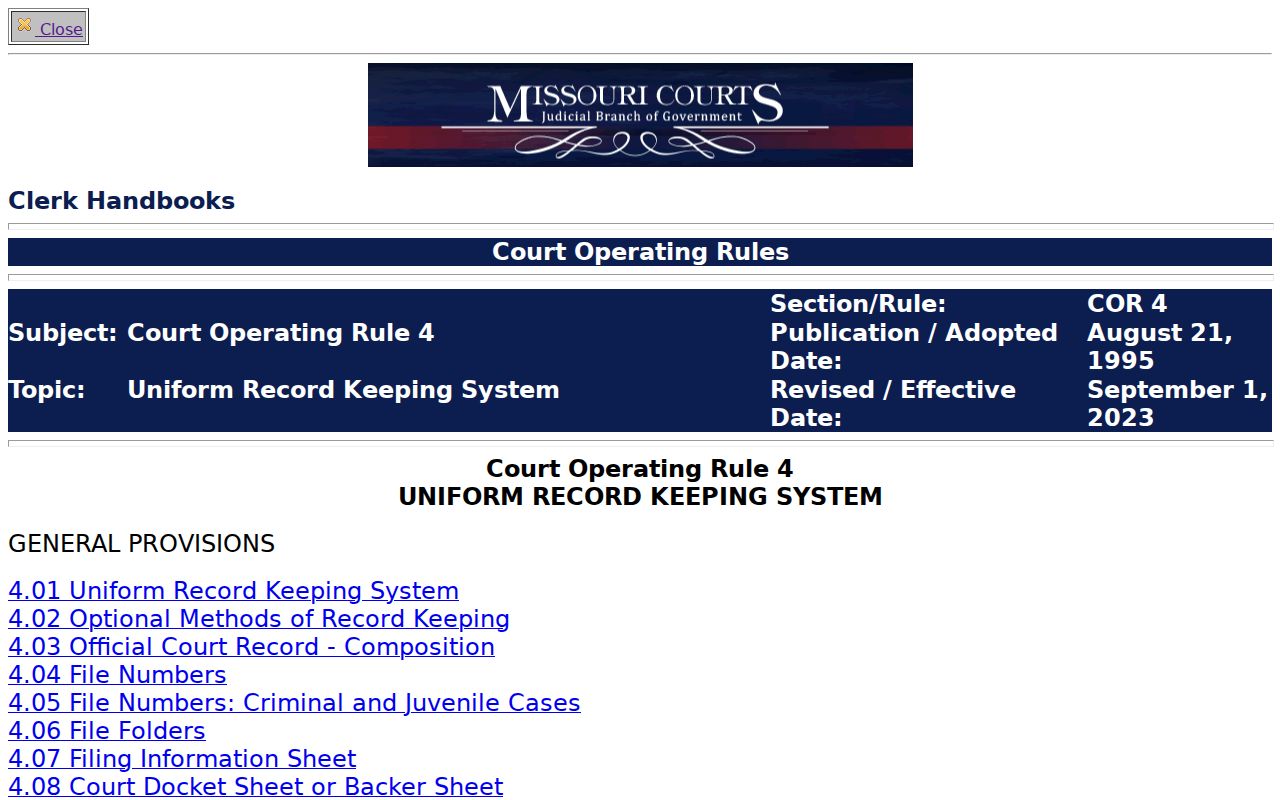
The rule's public-index and confidentiality provisions matter here. A Wright criminal docket search can show a case event yet hold back the documents tied to it. The official Missouri Rule 122.02 page also carries special access limits. Those apply to juvenile and family materials.
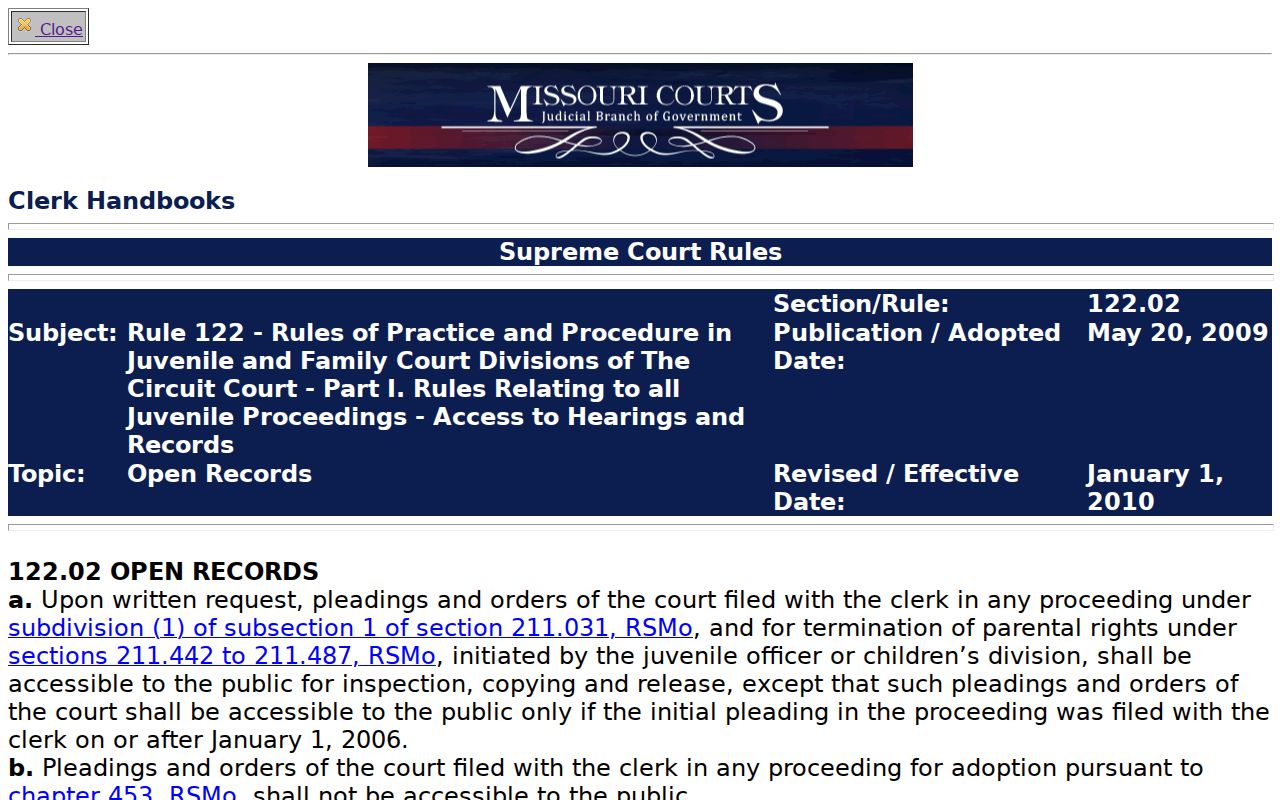
A criminal-related search result does not authorize disclosure of a juvenile or family file. For the confidentiality rule and its exceptions, the official RSMo § 211.321 source supplies the statute on juvenile records.
For a real Wright criminal docket, three sources answer what you can view or copy: the current case header, the docket entry, and the Circuit Clerk. Start there before assuming anything about the file.